Homeowners seeking a dependable pest control service Hemet can rely on can immediately secure their living spaces against invasive insects and vermin with targeted, contract-free treatments. Finding an effective pest control service near me means addressing the distinct environmental pressures of the San Jacinto Valley foothill ecosystems, where hot summer temperatures and seasonal agricultural harvesting drive pests directly toward residential irrigation and insulated structures.
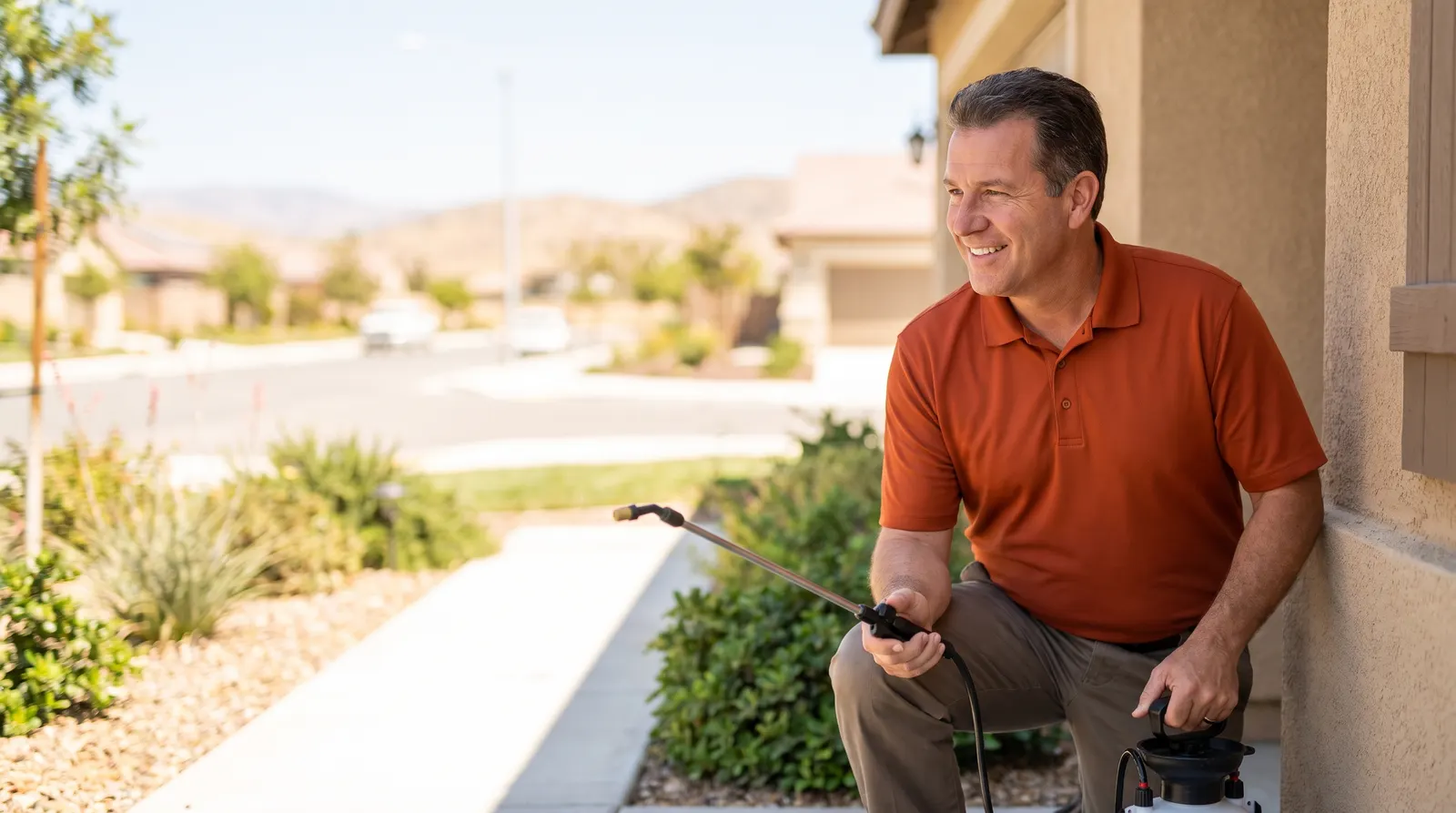
A pest control service in Hemet is a specialized residential and commercial management system that systematically detects, eliminates, and structurally excludes native desert and semi-arid pests across the San Jacinto Valley.
Every service reflects the same meticulous attention to detail — whether it's a single job or a larger pest control service project across Hemet.
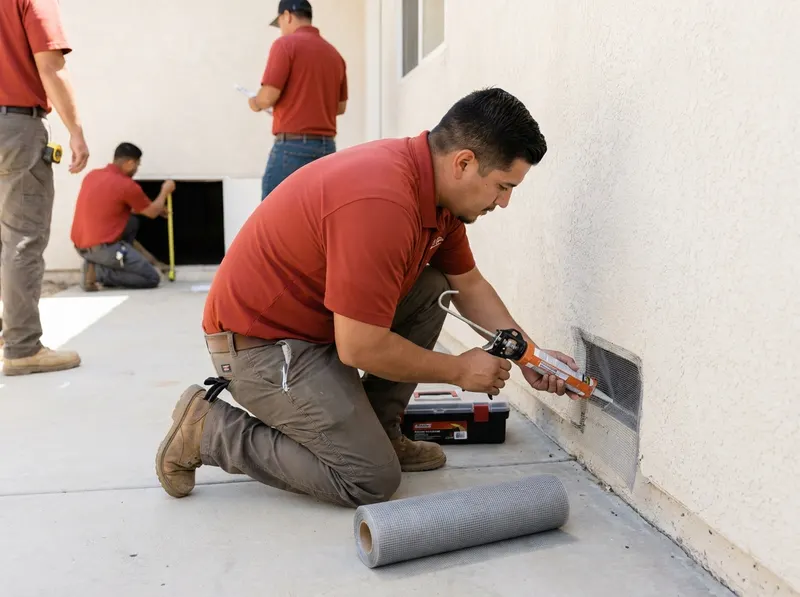
Roof rats, Norway rats, and deer mice frequently invade residential properties throughout Hemet, seeking refuge from seasonal valley temperature swings and outdoor predators. Technicians perform an exhaustive inspection of the structure from foundation stem walls to roof ridge caps, identifying entry points as small as one-quarter inch. Interior remediation combines strategically placed, tamper-resistant mechanical traps inside attic spaces, dropped ceilings, and crawlspaces with thermal imaging to map active nesting sites and travel runways. To prevent future re-infestation, technicians execute full structural exclusion by installing heavy-gauge galvanized hardware cloth over attic gable vents, sealing Spanish barrel tile roof openings with custom metal flashing or expanding foam mortar, and securing foundation crawlspace doors and air vents. Contaminated insulation containing urine, droppings, and pheromone trails is systematically evaluated for sanitation and spot cleanup to restore indoor air quality.
View details →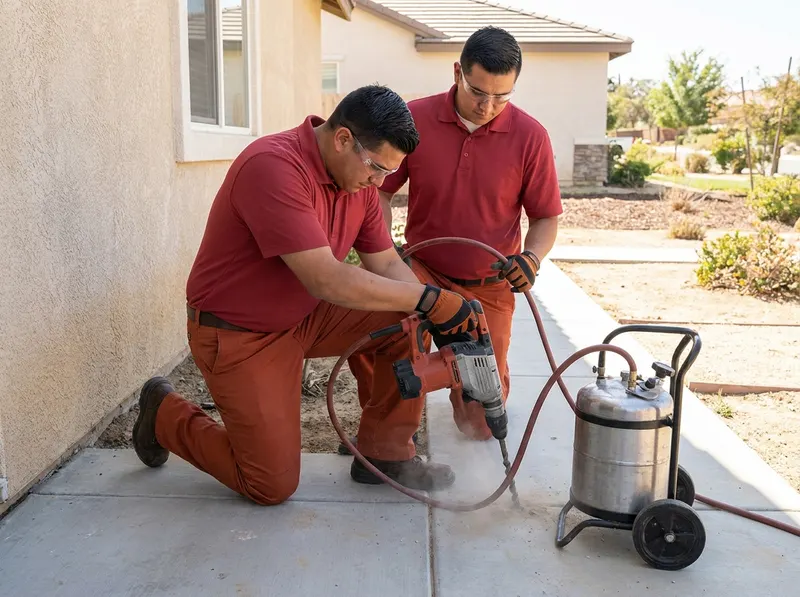
Subterranean termites represent a severe structural threat to Hemet homes built on concrete slab foundations, utilizing subterranean moisture to construct exploratory mud shelter tubes across foundation footings, stem walls, and plumbing penetrations. Remediation begins with an in-depth structural inspection to locate active mud tubes, hollowed wood framing, and discarded alate swarm wings. Treatment protocols utilize non-repellent liquid termiticides applied via precision soil trenching around exterior foundation perimeters and deep pressure rodding beneath concrete patios, driveways, and garage slabs. Because the termiticide is completely undetectable to the insects, foraging worker termites travel through the treated zone and passively transfer the active compound throughout the underground colony via grooming and food sharing, achieving total colony elimination down to the queen without disrupting the interior structure.
View details →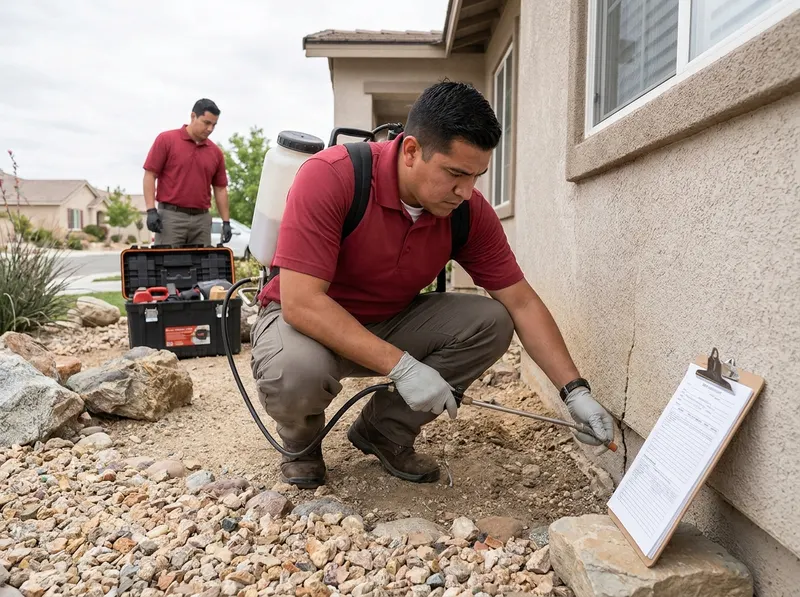
The semi-arid climate of the San Jacinto Valley fosters massive Argentine ant super-colonies that aggressively invade kitchens, bathrooms, and sub-slab expansion joints during extreme summer heat waves and winter rain events. Standard consumer pesticide sprays trigger colony defense mechanisms, causing the colony to fracture into multiple independent nesting sites throughout wall voids. Our technicians deploy specialized microencapsulated liquid formulations and slow-acting matrix gel baits along active structural foraging trails, utility line conduits, and exterior foundation lines. Worker ants consume and transport these non-repellent agents deep into subterranean galleries, distributing the active ingredient through trophallaxis to nursing workers and multiple egg-laying queens, completely collapsing the reproductive engine of the colony.
View details →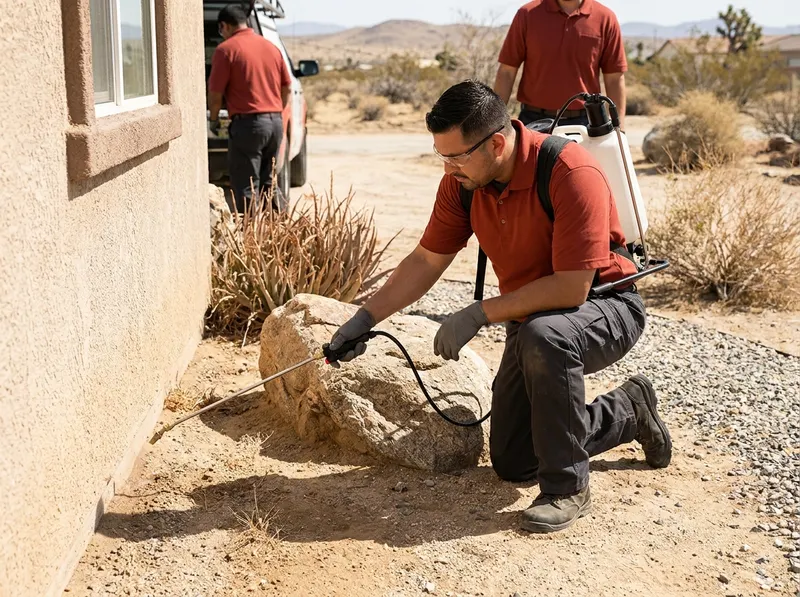
Black widows, brown widows, desert stripe-tailed scorpions, and yellow sac spiders thrive in Hemet's warm foothill topography, harboring inside decorative rock landscaping, irrigation valve boxes, block wall hollows, and garage corners. Our protective perimeter treatment establishes a continuous, multi-tiered defensive barrier starting at the property boundary and extending three feet up the exterior foundation walls and three feet outward across adjacent soil and hardscaping. Technicians use telescoping extension poles to de-web and sweep eaves, second-story overhangs, window frames, and patio covers, removing egg sacs and active webs. Exterior wall weep holes, exterior electrical boxes, and landscape expansion joints are treated with specialized micro-dust formulations to neutralize venomous arachnids and eradicate the localized insect populations they prey upon.
View details →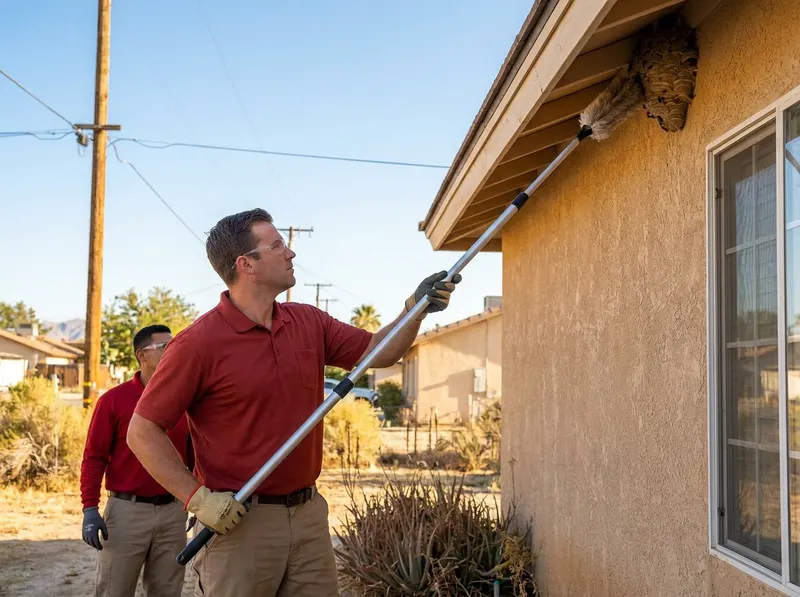
Paper wasps, aerial yellowjackets, mud daubers, and feral honeybees construct aggressive nests under stucco roof eaves, inside structural attic vents, beneath patio umbrellas, and within utility meter boxes. Technicians utilize rapid-knockdown, low-odor aerosol formulations and residual contact liquids applied directly to nesting structures from safe distances. Once adult flying insects are subdued, technicians physically detach and remove the physical nest structure to prevent secondary pest infestations from carpet beetles and ants. When bees or wasps establish colonies inside structural wall voids or chimney flues, service includes precision void drilling, insecticidal aerosol injection, comb and hive material removal where accessible, and complete sealing of exterior structural entry voids to eliminate returning scout insects.
View details →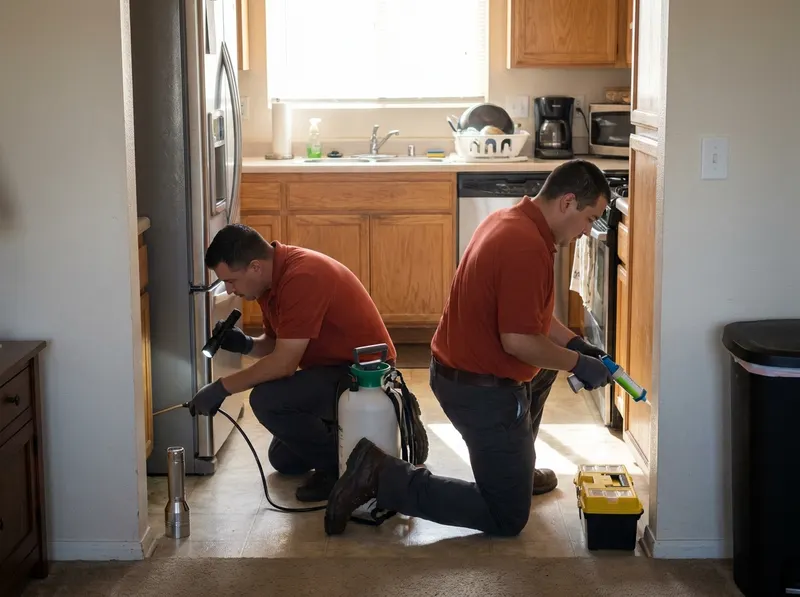
German cockroaches inside residential kitchens and American cockroaches emerging from municipal sewer cleanouts and plumbing drains present substantial health and sanitation risks. Our cleanout protocol avoids superficial aerosol fogging, which drives insects deeper into structural cavities. Instead, technicians perform direct harborage flushing using insect growth regulators (IGRs) that arrest juvenile reproductive development, paired with precision placements of high-palatability matrix baits inside cabinet hinge pockets, behind refrigeration compressor coils, and along interior pipe chases. High-efficiency mechanical vacuuming is deployed to rapidly reduce adult breeding populations in heavy harborage zones, followed by dusting void spaces beneath baseboards and sinks with long-lasting inorganic desiccant dusts.
View details →
Sandy foothill soils, high summer temperatures, and local wildlife activity support rapid reproduction of cat fleas and brown dog ticks in Hemet yards, dog runs, and shaded patio perimeters. Our comprehensive remediation targets both indoor living zones and outdoor turf and soil environments simultaneously. Outdoor treatments incorporate dual-action adulticides and photo-stable insect growth regulators applied to shaded lawn areas, under deck spaces, along fence lines, and around exterior pet resting areas. Indoor applications focus on carpet fibers, baseboard perimeters, rug underlays, and upholstered furniture seams to eliminate active biting adults and prevent immature flea larvae and pupae from emerging from deep carpet piles.
View details →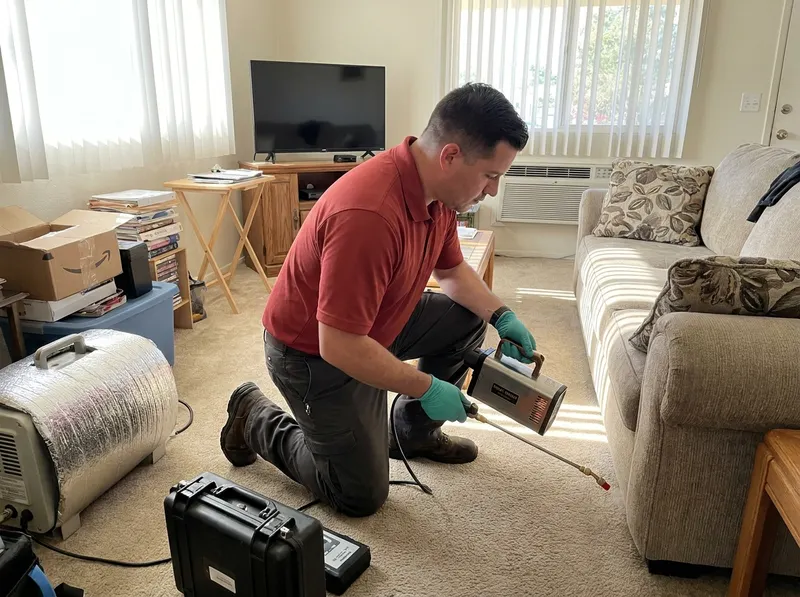
Bed bugs shelter in minute cracks, mattress seams, bed frames, headboard crevices, baseboard junctions, and electrical switch plates, feeding on human hosts during nighttime hours and causing persistent physical irritation. Our comprehensive bed bug eradication process combines targeted high-temperature dry steam treatments on contact surfaces with precision crack-and-crevice applications of long-residual insecticides and desiccant dusts. Every room is methodically prepared and treated, targeting mattress tufts, box spring internal structures, nightstand joints, and carpet tack strips. By attacking both active adult insects and heat-resistant egg clusters, the multi-phase treatment breaks the developmental cycle without requiring the disposal of valuable bedroom furnishings.
View details →A pest control service in Hemet is a specialized residential and commercial management system that systematically detects, eliminates, and structurally excludes native desert and semi-arid pests across the San Jacinto Valley.
You get a firm, itemized quote for your pest control service before any work begins — no surprises, no pressure.
Careful prep, tidy work, and a full cleanup when we are done. We treat your home and belongings like our own.
The same trusted, background-checked team from the first call to the final check.
Selecting the right pest control approach in Hemet requires matching the specific pest biology and nesting behavior to the structural characteristics of your property. If your home has visible trailing worker ants along baseboards, sinks, or window sills, choose a targeted non-repellent baiting program rather than broad-spectrum repellent surface sprays. Repellent sprays cause Argentine ant colonies to split into multiple satellite colonies through budding, which worsens the indoor infestation, whereas non-repellent baits are carried back to the subterranean nest to eliminate the reproductive queen. If your primary concern is nighttime scurrying, gnawing noises in the attic, or shredded fiberglass insulation, choose a complete mechanical trapping and structural exclusion protocol instead of exterior rodenticide bait boxes alone. Exterior rodenticide boxes reduce outdoor rodent density but fail to remove animals already nesting inside wall voids, while structural exclusion permanently seals the roof tile gaps, eave returns, and crawlspace vents that allow roof rats and field mice entry. The trade-off is that structural exclusion requires physical repairs and material sealing, representing a higher initial investment than simple trap setting, but it provides permanent protection without ongoing chemical exposure. When managing wood-destroying subterranean termites near concrete slab foundations, localized chemical soil trenching and foundation rodding must be selected over general perimeter pest barriers. General perimeter sprays only protect the outer soil surface and do not penetrate down to the depth of subterranean termite mud tubes and foundation cold joints, whereas dedicated termiticide trenching creates a continuous treated zone that transfers throughout the underground colony. For stinging insect infestations, if wasps or yellowjackets are nesting in exterior open eaves, direct knockdown and residual liquid treatment resolve the issue immediately; however, if bees or wasps have colonized an enclosed wall void or attic cavity, the treatment must combine aerosol flushing, structural extraction of the wax comb or nest mass, and physical void sealing to prevent honey fermentation, secondary beetle infestations, and recurring colonization.
Every project gets a firm, written price after a free on-site visit. Ranges below for orientation.
Tell us about your pest control service job and we'll send a clear, written quote — usually the same day. Or just call and talk to a real Hemet pro.
(951) 799-7556
Hemet occupies a distinct geographical transition zone within Riverside County, situated in the San Jacinto Valley between the base of the San Jacinto Mountains and the expansive water reserve of Diamond Valley Lake. This semi-arid climate—characterized by intense summer temperatures exceeding 100 degrees Fahrenheit, dry autumn winds, and mild winter rains—drives specific seasonal pest patterns that differ significantly from coastal Southern California regions. In residential neighborhoods bordering open natural chaparral, such as the Ramona Bowl District, Stetson Ranch, and areas near Simpson Park, native wildlife and desert pests regularly migrate toward irrigated residential properties. During peak summer heat, desert scorpions, black widows, and roof rats seek moisture around swimming pool equipment pads, decorative rock perimeters, and lush landscaping along Florida Avenue (Highway 74), Stetson Avenue, and Sanderson Avenue. In master-planned and retirement communities such as Solera Diamond Valley, Panorama Village, and Seven Hills, structural construction types present distinct pest vulnerabilities. Many properties built on concrete slab foundations feature sub-slab plumbing lines and stucco weep screeds that sit close to ground level, providing direct subterranean entryways for Argentine ant super-colonies and subterranean termites. Agricultural citrus groves in nearby Valle Vista and East Hemet, along with open recreation corridors around Valley-Wide Regional Park and the Western Science Center near Domenigoni Parkway, support high baseline populations of field rodents, gophers, and agricultural crickets. When agricultural tilling or seasonal harvesting occurs, displaced rodents travel along canal banks and roadway easements directly into surrounding neighborhoods. Our pest control protocols are designed specifically around these San Jacinto Valley environmental realities, focusing on deep structural exclusion, moisture-zone mitigation, and heat-stable perimeter barriers that maintain efficacy despite intense sun exposure and alkaline soil conditions.
Free estimates for Hemet & the surrounding area.
 Bug Free Home Removal